
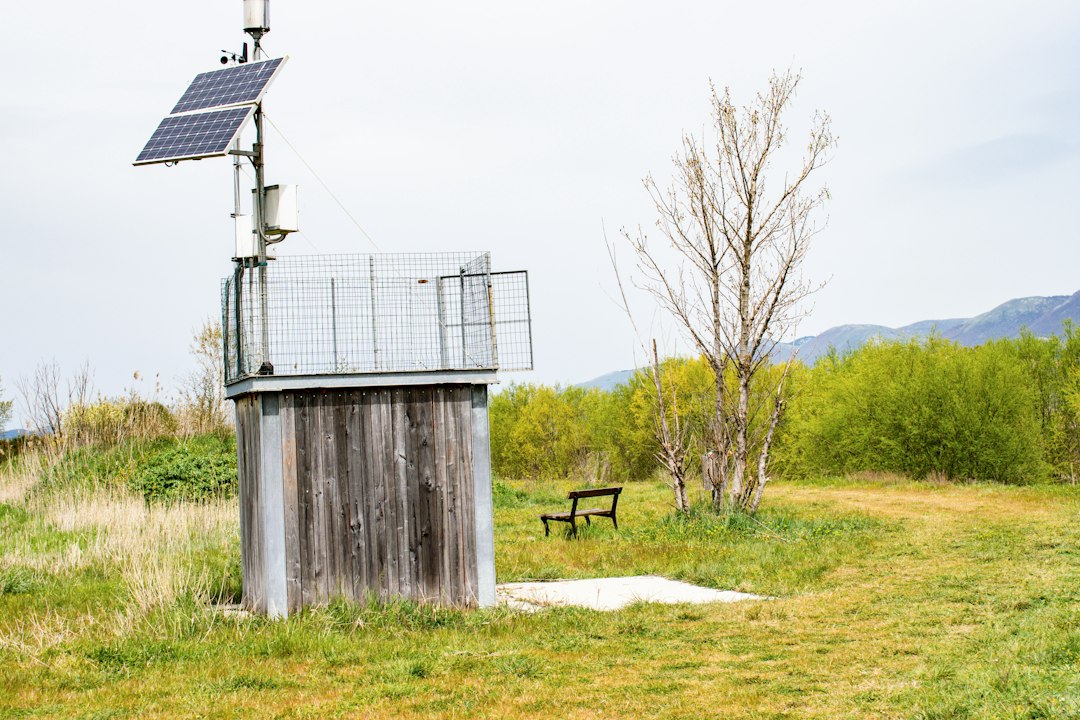
What a Continuous Ambient Air Quality Monitoring System Does
A continuous ambient air quality monitoring system measures outdoor pollution over time instead of relying on a single sample. It brings together gas and particle monitors, often with weather sensors, to collect readings, flag changes, and help teams decide when to investigate. For building owners and environmental teams, the key question is whether the system measures the specific pollutants their site needs to track.
These systems can help monitor dust around construction work or track pollution near an industrial boundary. But a live dashboard does not, by itself, prove regulatory compliance. Equipment, placement, calibration, and reporting must fit the applicable rules.
I’m Michael Otto, Managing Partner at G/A Environmental and a Texas-licensed asbestos and mold consultant. My work helping property owners assess environmental hazards shapes this guide to choosing and using a continuous ambient air quality monitoring system.
Core Components and Working Principles of a Continuous Ambient Air Quality Monitoring System
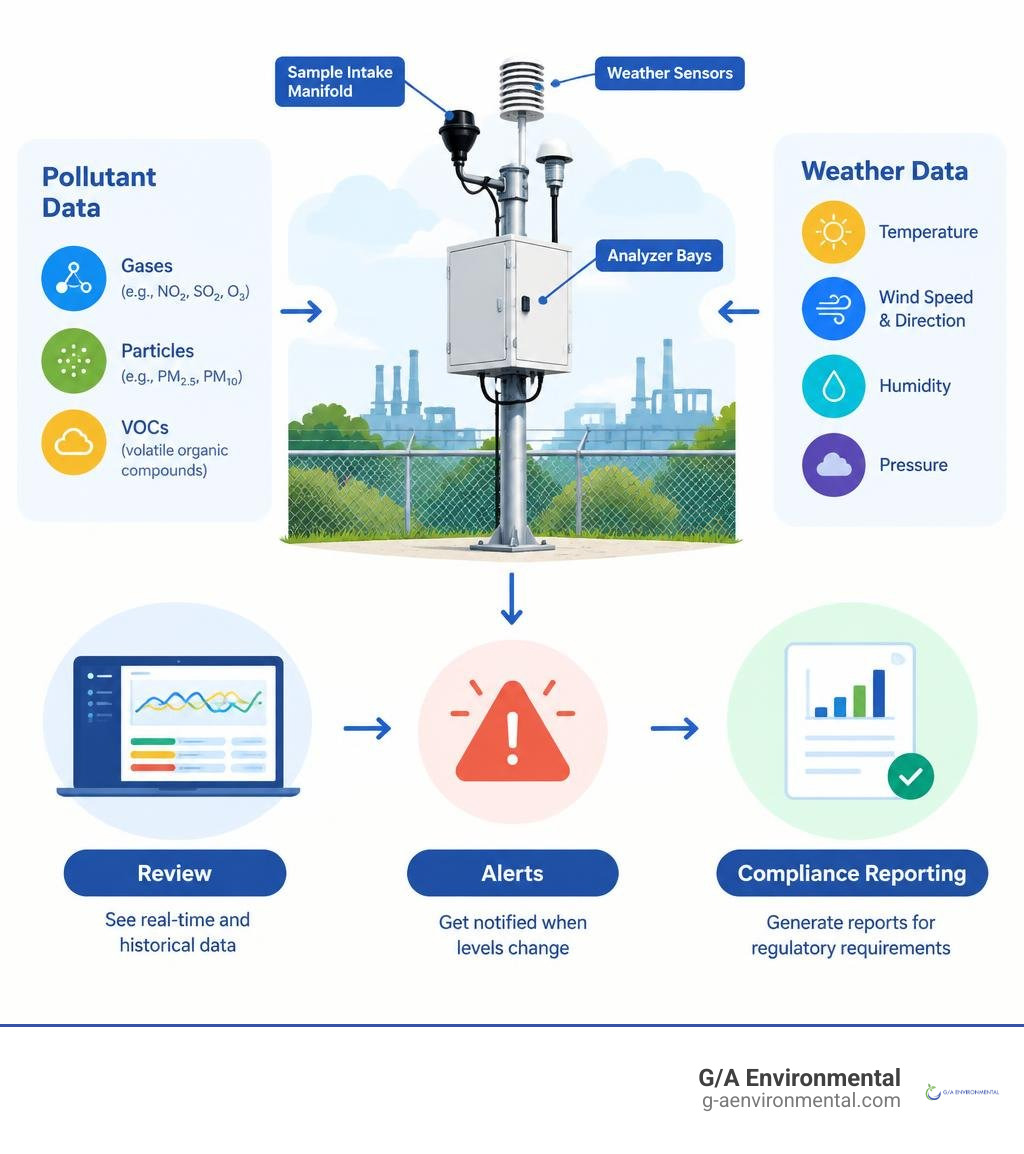
A continuous ambient air quality monitoring station operates as a synchronized ecosystem designed to capture, condition, analyze, and transmit air contaminant data without human intervention. At the hardware level, every functional station relies on five core operational subsystems:
- Sample Intake Manifolds: Specially engineered, non-reactive sampling lines (typically manufactured from high-grade PTFE, perfluoroalkoxy, or passivated stainless steel) that draw ambient air into analyzer bays. These sample lines frequently include sample conditioning hardware such as cyclone separators, moisture traps, or heated sample inlets to prevent condensation and particle agglomeration.
- Gas Analyzer and Detector Modules: Dedicated analytical engines optimized for specific gaseous species, employing optical, chemical, or electrical detection mechanisms.
- Particulate Measurement Heads: Sizing inlets (such as PM10 and PM2.5 omnidirectional sampling heads) coupled to optical particle counters, nephelometers, or radiometric attenuation instruments.
- Meteorological Sensors: Co-located weather heads measuring real-time wind speed, wind direction, ambient temperature, relative humidity, barometric pressure, and solar irradiance. Without precise local meteorological data, tracing a chemical plume or dust cloud back to its point of origin is virtually impossible.
- Integrated Data Loggers and Telemetry: On-board microcomputers that acquire sensor output voltages and serial communication data streams, execute baseline compensation calculations, store records in non-volatile solid-state memory, and transmit packaged data payloads over secure cellular (4G/LTE), satellite, or hardwired Ethernet networks.

Selecting equipment requires understanding the performance differences between available station architectures. Modern systems fall into three primary equipment tiers based on analytical precision, physical footprint, power demand, and capital cost.
| System Classification | Typical Detection Limits | Power Consumption | Target Deployment Speed | Primary Application Suitability |
|---|---|---|---|---|
| Reference-Grade (FEM/FRM) | Parts-per-trillion (ppt) to sub-ppb | 500W – 4,000W (Mains AC) | Days to weeks (requires permanent shelter) | Regulatory compliance, legal defense, air basin monitoring |
| Near-Reference Compact Stations | Sub-ppb to low-ppm | 10W – 60W (AC or Solar Arrays) | 10 to 60 minutes | Industrial fencelines, site remediation, urban density grids |
| Distributed Sensor-Based Monitors | Parts-per-million (ppm) to high-ppb | 0.08W – 5W (Micro-Solar / Internal Battery) | Under 10 minutes | Rapid screening, vehicle fleets, community awareness |
When evaluating fluctuating real-time traces, facilities must understand how micro-sensors respond to field stressors by interpreting air quality sensor data trends to prevent false exceedance alarms.
Tiered Equipment Categories: Reference-Grade vs. Near-Reference vs. Sensor-Based
Reference-Grade Systems: These stations use analyzers certified under Federal Reference Methods (FRM) or Federal Equivalent Methods (FEM). Housed inside climate-controlled walk-in shelters or 20-foot shipping containers, they represent the gold standard of regulatory defensibility. They operate using direct spectroscopic absorption, chemiluminescence, or beta-ray attenuation, ensuring low drift and high specificity. However, their high power footprint (often several kilowatts to maintain interior climate controls) and significant capital investment make them less suitable for agile, high-density industrial perimeter networks.
Near-Reference Compact Stations: Bridging the gap between laboratory instrumentation and field portability, near-reference stations package miniaturized optical and gas modules into compact, weatherproof enclosures. Systems such as the AQM 65 Ambient Air Monitoring Solution | Aeroqual and the AQS 1 Air Quality Monitor | Aeroqual deliver data that correlates strongly with FEM analyzers (often achieving $R^2 > 0.90$) at a fraction of the physical footprint and power cost. These units utilize internal thermal stabilization, automatic baseline drift algorithms, and smart sample heating to achieve reliable ppb-level quantification without requiring large shelter cabins.
Distributed Sensor-Based Monitors: Micro-sensor units, including the Sensor-Based Ambient Air Quality Monitor – Vepolink and the Aethair PRO | Industrial & Outdoor Air Quality Monitor, are built for high-density spatial distribution. Drawing as little as 0.08W to 1.2W of power and weighing under 3.5 kg, these devices can be installed on light poles, perimeter chain-links, or mobile equipment in under ten minutes. While they exhibit wider measurement uncertainty than reference instruments, their ability to form dense, interconnected mesh networks makes them useful for localized hotspot mapping, immediate leak detection, and fugitive dust tracing.
Measurement Technologies for Particulate Matter and Target Gases
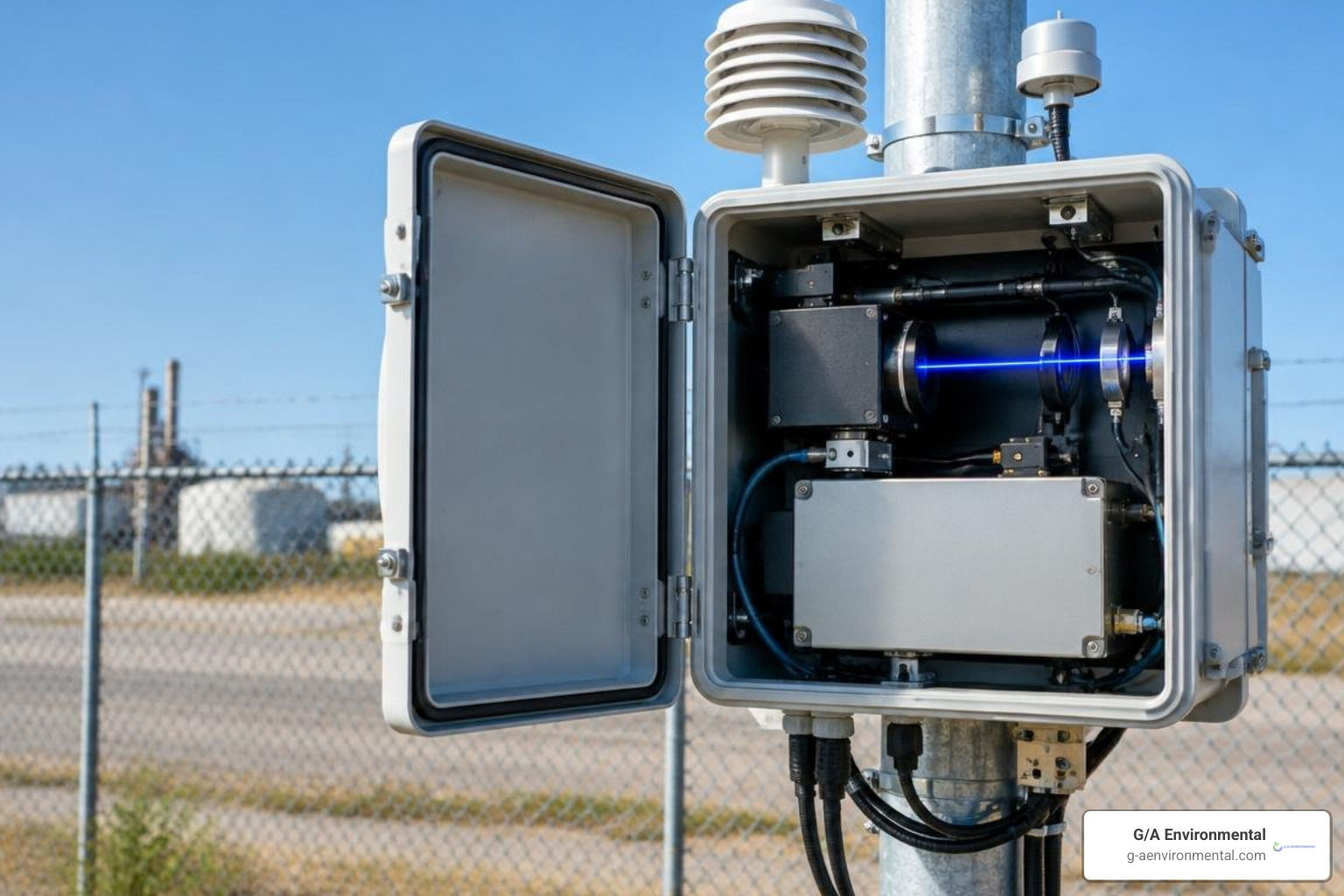
Modern air monitoring relies on distinct physical principles to measure airborne particles and chemical compounds:
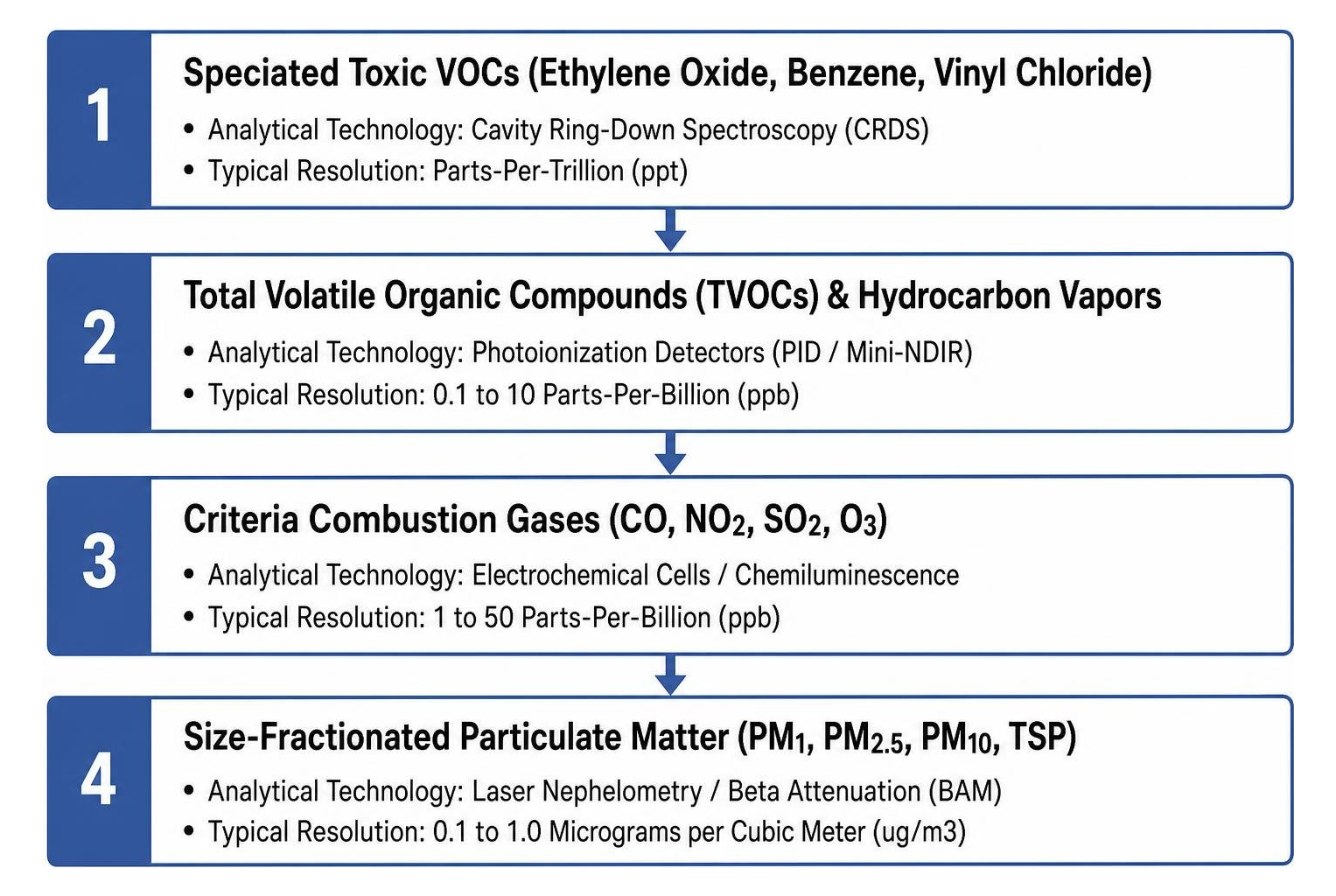
- Particulate Sizing via Beta Attenuation Monitoring (BAM): Long considered a reference standard, BAM pulls ambient air across a continuous filter tape and measures the reduction in beta-particle transmission through the accumulated dust deposit. This yields a direct mass measurement ($\mu\text{g/m}^3$) largely independent of particle refractive index or color.
- Laser Nephelometry and Optical Particle Counters (OPC): Compact and near-reference monitors direct a collimated laser diode into a sampling chamber. As airborne particles cross the beam, they scatter light across designated angles. Photodiodes measure the intensity and pulse count of scattered light, using Mie scattering theory to calculate size-segregated particulate fractions ($PM1, PM{2.5}, PM4, PM{10}$, and Total Suspended Particulates). Advanced modules incorporate smart sample heaters that activate automatically when relative humidity surpasses 60%, preventing hygroscopic moisture droplets from swelling particulate readings.
- Cavity Ring-Down Spectroscopy (CRDS): For high-sensitivity gas detection, CRDS technology directs a tunable laser into an ultra-reflective optical cavity bordered by mirrors. By measuring the light decay rate (“ring-down time”) as target molecules absorb specific optical frequencies, systems like the Fenceline Monitoring System (FMS) achieve parts-per-trillion (ppt) detection limits with response cycles of 5 seconds across broad compound libraries.
- Chemiluminescence and NDIR Analyzers: Nitrogen oxide ($NOx$) detection historically relies on the luminescent reaction between nitric oxide ($NO$) and generated ozone ($O3$), emitting measurable light proportional to concentration. Carbon dioxide ($CO_2$) and carbon monoxide ($CO$) are predominantly quantified using Non-Dispersive Infrared (NDIR) sensors, which measure species-specific infrared absorption bands.
- Electrochemical Catalytic Cells: Employed within sensor-based monitors, these miniature modules pass target gas molecules across an electrolyte-wetted gas diffusion barrier. Catalytic oxidation or reduction generates an electrical current directly proportional to gas concentration, delivering response times between 15 and 30 seconds for species like $H2S, SO2, NH3$, and $NO2$.
For large-scale industrial assets, aligning continuous monitoring with regulatory standards from Ambient air monitoring – Acoem provides the defensibility required during environmental audits.
Selecting Target Pollutants and Meteorological Parameters for Comprehensive Tracking
Air monitoring programs must balance regulatory mandates against operational hazards. Selecting the wrong target parameters or deploying inadequate detection limits can compromise environmental compliance audits and worker health initiatives. In many commercial real estate transactions and site redevelopments, baseline air surveillance operates alongside a formal Phase II environmental site assessment test to verify that historical ground contaminants are not volatilizing into ambient breathing zones.
Criteria Air Pollutants and Particulate Fractions
The primary framework for outdoor air surveillance centers on the criteria pollutants governed under the Clean Air Act and National Ambient Air Quality Standards (NAAQS):
- Fine Particulates ($PM_{2.5}$) and Coarse Particulates ($PM_{10}$): Fine inhalable combustion particles ($PM_{2.5}$) penetrate deep into the alveolar regions of the lungs, while coarse mechanical dust ($PM_{10}$) impacts the upper airways. Continuous monitoring tracks fugitive dust from earthmoving, aggregate crushing, and regional wildfire events.
- Ozone ($O_3$): A secondary pollutant formed by the photochemical reaction of $NO_x$ and Volatile Organic Compounds (VOCs) in the presence of sunlight and atmospheric heat.
- Nitrogen Dioxide ($NO2$) and Sulfur Dioxide ($SO2$): Toxic combustion byproducts responsible for localized respiratory irritation and atmospheric acid formation.
- Carbon Monoxide ($CO$): An odorless byproduct of incomplete fuel combustion, critical for tracking urban vehicle corridor build-up and industrial perimeter plumes.
Accurate measurement of these criteria pollutants requires co-located meteorological arrays. A sudden spike in $PM_{10}$ concentration is impossible to attribute to an on-site haul road without synchronized wind velocity and direction vectors confirming that air traveled across the active work zone toward the monitor inlet.
Hazardous Organic Compounds and Speciated VOC Detection
Heavy industrial operators, petrochemical refineries, and chemical synthesis plants face strict surveillance standards for Hazardous Air Pollutants (HAPs). Regulations such as the U.S. EPA Refinery Sector Rule and National Emission Standards for Hazardous Air Pollutants (NESHAP) for Hazardous Organic NESHAP (HON) mandate continuous monitoring for toxic volatile organics along property perimeters.
Target species include:
- Benzene ($C6H6$): A volatile human carcinogen regulated at low single-digit ppb action thresholds.
- Ethylene Oxide ($C2H4O$): A potent sterilant and chemical intermediate requiring detection limits down to parts-per-trillion (ppt) levels due to low permissible human exposure ceilings.
- 1,3-Butadiene and Vinyl Chloride: Highly reactive industrial monomers demanding continuous spectroscopic tracking to verify that fugitive plant leaks are mitigated before migrating into adjacent residential zones.
Deployment Architecture: Shelters, Power Management, and Mobile Versus Fixed Configurations
Deploying air monitoring infrastructure requires careful mechanical, electrical, and structural planning. Field instrumentation must operate reliably in variable weather while capturing representative air samples.

When establishing perimeter surveillance, a comprehensive environmental site assessment guides optimal station layout based on historical emissions, local hydrology, and prevailing wind corridors.
Fixed Enclosures, Solar Power Sizing, and Off-Grid Engineering
Monitoring stations are installed in several common hardware configurations:
- Walk-In Environmental Enclosures and Shelter Containers: 8-foot to 20-foot insulated shelters equipped with redundant split-system HVAC units, internal calibration gas cylinder racks, zero-air scrubbers, and 19-inch equipment racks. These are ideal for long-term reference stations drawing 1,000W to 4,000W of utility power.
- Pole-Mounted Compact Enclosures: Sealed, lockable, IP65/IP66 glass-reinforced polymer (GRP) or powder-coated aluminum enclosures with integrated solar radiation shields. Instruments in this class (such as the Aeroqual AQS 1 or Vepolink monitor) weigh between 3.5 kg and 13 kg, allowing secure installation on standard 2-inch to 4-inch utility poles, scaffold poles, or building parapets at the recommended 2 to 4-meter breathing zone height.
- Off-Grid Photovoltaic Engineering: For remote sites lacking mains AC power, continuous runtime depends on accurate watt-hour modeling. Ultra-low-power sensor arrays drawing 1.2W can run indefinitely on a 30W to 50W solar panel paired with a 20Ah lithium-iron-phosphate ($LiFePO_4$) battery bank. Conversely, compact near-reference monitors drawing 30W to 50W (due to heated inlet lines and continuous vacuum pumps) require 300W to 600W solar arrays and 100Ah+ deep-cycle battery banks to survive several consecutive overcast winter days. Advanced systems utilize onboard firmware like Smart Heater and Power Scheduler routines to power down non-essential sub-modules during extended low-battery conditions.
Mobile Monitoring Vans Versus Stationary Network Stations
Choosing between fixed perimeter networks and mobile monitoring platforms depends on your monitoring objectives:
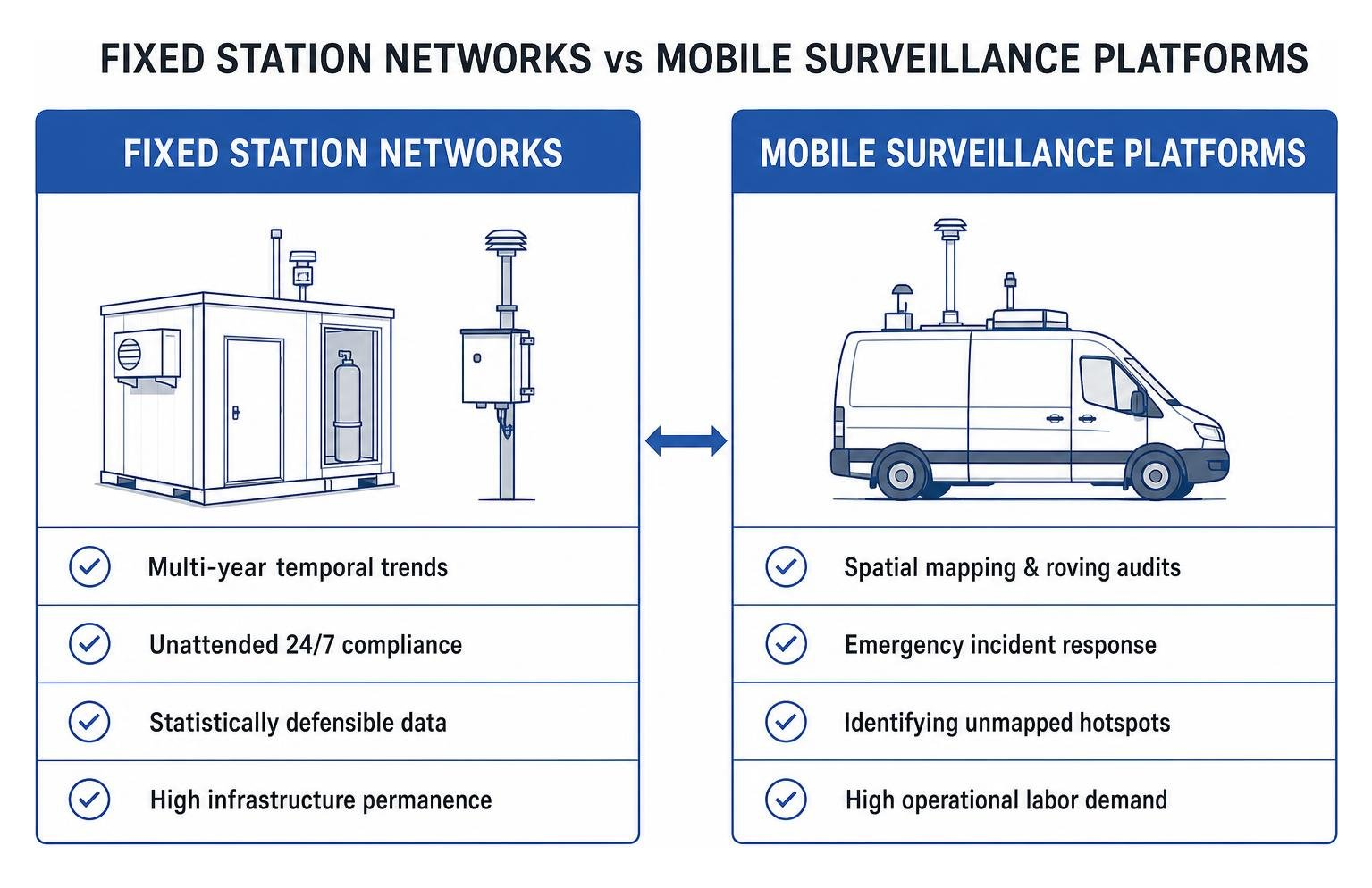
Fixed stations provide reliable multi-month baseline trends, automated threshold alarming, and defensible compliance records. However, fixed sensors cannot track a drifting plume outside their line of sight.
Mobile monitoring vans—equipped with roof-mounted sample masts, high-speed spectrometers, GPS tracking, and auxiliary battery banks—serve as rapid-response platforms. They can audit localized odor complaints, map pollution cross-sections across urban corridors, or quickly pinpoint leaking industrial valves.
Real-World Applications Across Industrial, Urban, and Remediation Sites
Real-time air monitoring serves varied roles across different operational settings:
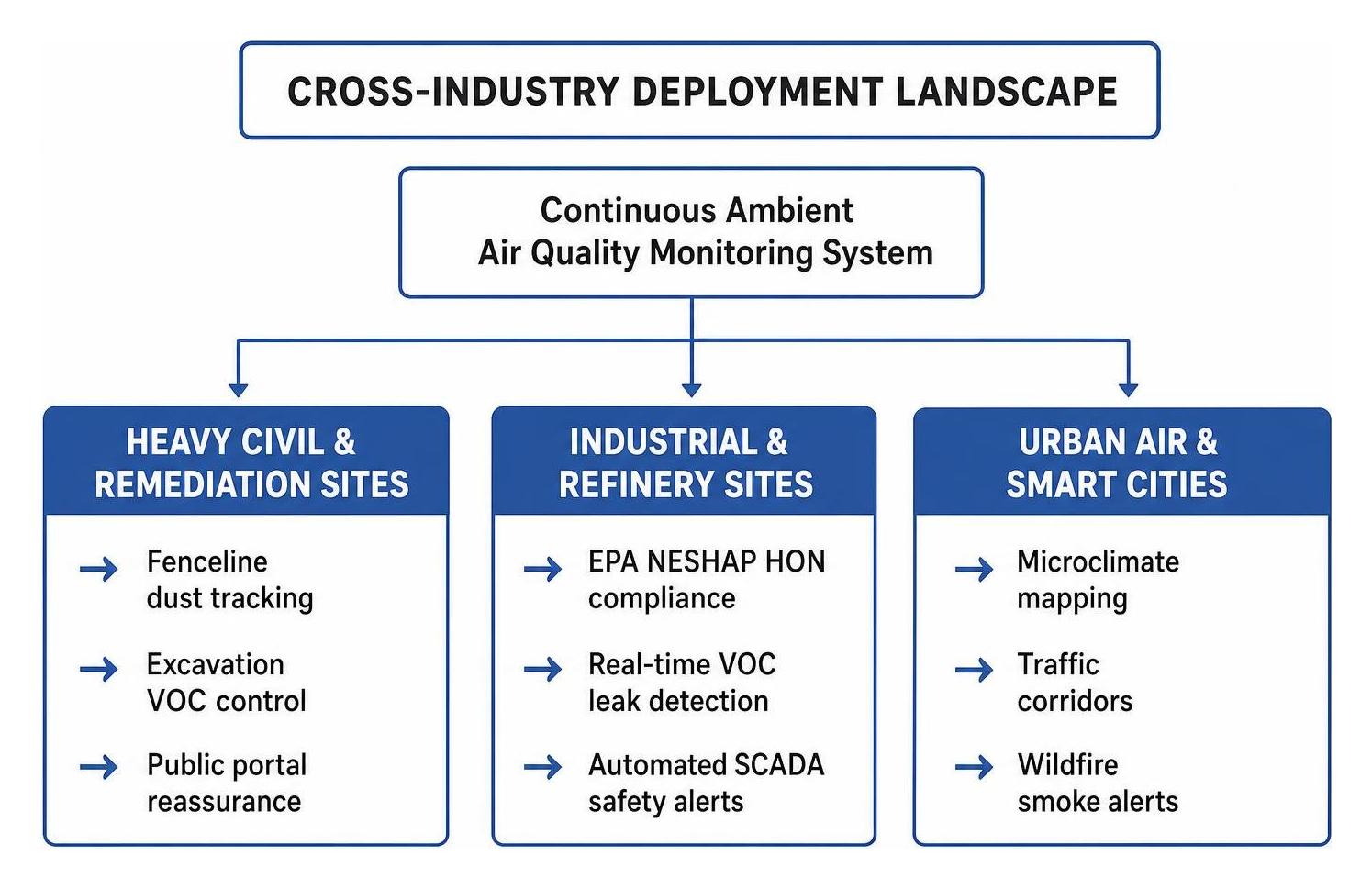
Comprehensive environmental strategies often link outdoor ambient tracking with specialized indoor diagnostics, including commercial mold inspection and testing, structured commercial radon testing, and certified lead testing services during major property renovations.
Designing a Continuous Ambient Air Quality Monitoring System for Industrial Compliance
Industrial chemical plants, tank farms, and manufacturing complexes integrate ambient perimeter networks directly into plant distributed control systems (DCS) using industrial protocols such as MODBUS RTU, RS-485, and direct REST APIs.
When an upwind-downwind pair of sensors detects a statistically significant delta in VOC or toxic gas concentrations exceeding predefined internal thresholds, the system automatically:
- Sends SMS, email, and webhook alerts to the on-duty Environmental Health and Safety (EHS) team.
- Triggers an automated valve closure or vapor extraction system via industrial SCADA interlocks.
- Tags and stores high-resolution 1-minute analytical data on secure cloud servers to generate automated compliance reports.
When facilities undergo structural abatement, integrating outdoor fenceline monitoring with formal AHERA compliance management prevents hazardous fibers and toxic dusts from migrating off-site.
Fenceline Surveillance, Urban Grids, and Construction Perimeter Monitoring
- Civil Demolition and Remediation: During soil remediation or structural demolition, continuous $PM_{10}$ and TVOC monitors establish baseline dust levels before work begins. If earthmoving equipment creates a dust plume, the system alerts site supervisors to activate water misting trucks before perimeter limits are breached.
- Urban Smart-City Meshes: Municipal agencies deploy dozens of solar-powered micro-sensors across light poles, school zones, and transit routes. This high-density grid maps localized microclimates and rush-hour $NO_2$ spikes, providing actionable data for city planners and public health advisories.
- Wildfire Smoke Surveillance: During regional wildfires, solar-powered particulate stations provide continuous 1-minute $PM_{2.5}$ tracking, helping school districts and municipal managers make informed facility closure decisions.
Data Integrity, Calibration Protocols, and Extreme Environment Management
An air monitoring station is only as dependable as its quality assurance protocols. Without routine zero checks, span calibrations, and preventive maintenance, sensor drift and environmental fouling can degrade measurement accuracy over time.
| Operational Activity | Micro-Sensor Platforms | Compact Near-Reference Systems | Reference-Grade Analyzers |
|---|---|---|---|
| Zero Baseline Verification | Automated dynamic cloud compensation (Daily) | Automated Baseline Correction (ABC) every 60 sec | Automated zero-air generator cycles (Daily/Weekly) |
| Span Gas Calibration | Factory cartridge swap (every 6–12 months) | Multi-point NIST cylinder span (every 3–6 months) | Automated multi-point cylinder span (every 1–2 weeks) |
| Inlet Filter & Pump Service | Seasonal debris check (6 months) | Filter replace & pump rebuild (3–6 months) | Bi-weekly filter changes; annual pump rebuilds |
| Quality System Standard | Manufacturer QA guidelines | ISO/IEC 17025 field traceability | Strict EPA QA Handbook Vol II compliance |
How to Maintain Accuracy in a Continuous Ambient Air Quality Monitoring System Under Extreme Climates
Field instruments often operate in challenging weather conditions, from arctic cold to intense desert heat:
- Sub-Zero Arctic Environments (-10°C down to -40°C): At low temperatures, liquid electrolytes in electrochemical sensors can freeze, pump diaphragms stiffen, and condensation freezes inside sample lines. To maintain accuracy, instruments use thermal winterization jackets, silicone heating bands along sample intake tubes, and internal thermo-electric heating modules that keep internal temperatures within target ranges.
- High-Heat Desert Climates (+40°C to +50°C): Intense heat accelerates sensor degradation and distorts optical baselines. Industrial monitors use reflective solar shields, vortex coolers, or dual-stage Peltier chillers to dissipate internal heat and keep electronic components stable.
- Tropical Humidity and Marine Salt-Fog: High humidity causes water vapor to condense inside optical chambers, scattering light and creating false particulate spikes. Using heated sampling inlets with smart relative humidity sensors preserves fine droplet evaporation while keeping solid particles intact for measurement.
Remote Telemetry, Automated Baseline Correction, and Quality Assurance
To maintain high data completeness across remote monitoring networks, modern stations use multi-tier data management workflows:
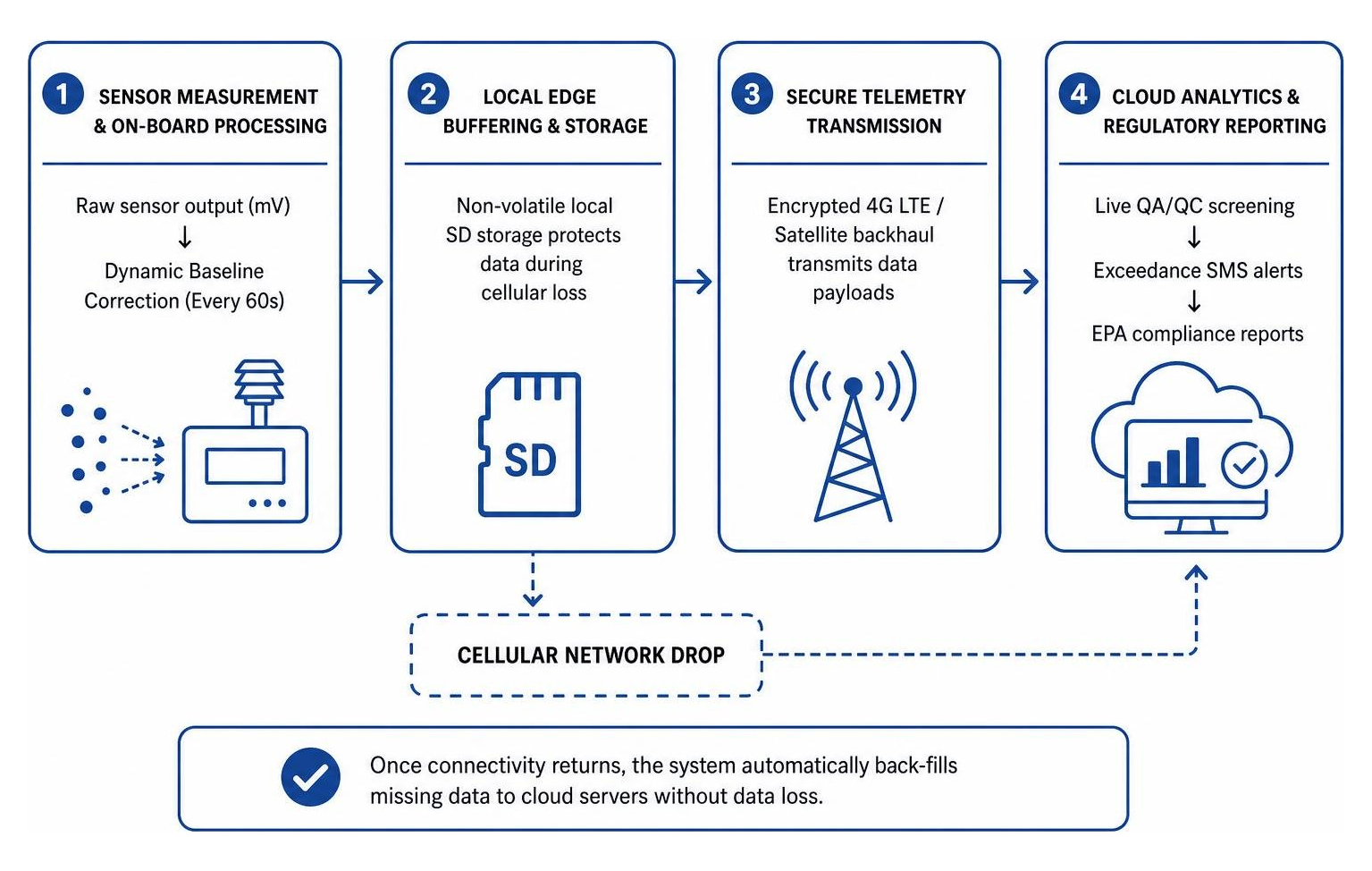
If a cellular network drops, on-board data loggers cache records locally. Once connectivity returns, the system automatically back-fills missing data to cloud servers without data loss.
Frequently Asked Questions About Continuous Ambient Air Monitoring
What is the primary difference between reference-grade and sensor-based continuous air monitors?
Reference-grade monitors are certified under formal regulatory protocols (such as U.S. EPA FRM/FEM) and use direct spectroscopic or gravimetric measurement methods. They deliver defensible baseline data, but require large, climate-controlled walk-in shelters, high electrical power (often several kilowatts), and significant capital expenditure. Sensor-based monitors use compact electrochemical, metal-oxide, or miniature optical components housed in lightweight enclosures. While sensor-based devices exhibit higher measurement uncertainty, they cost substantially less, draw under two watts of power, and can be rapidly deployed in dense spatial networks to pinpoint localized plumes and fugitive emission sources.
How often must continuous ambient air monitoring systems undergo routine calibration?
Calibration intervals depend on the equipment tier and project data quality objectives:
- Reference Analyzers: Require automated daily or weekly zero/span checks using high-purity zero-air generators and NIST-traceable calibration gas cylinders, supplemented by quarterly multi-point audits.
- Near-Reference Compact Stations: Typically undergo field zero and span calibrations every 3 to 6 months, using certified span gases to adjust internal response curves.
- Sensor-Based Monitors: Often utilize pre-calibrated, factory-certified modular sensor cartridges that are swapped on a 6 to 12-month cycle, avoiding the need for on-site span gas handling.
Can continuous ambient air monitoring systems operate entirely off-grid in extreme temperatures?
Yes. Off-grid operation requires matching the system’s power draw to the local solar profile and temperature range. Low-power sensor monitors drawing between 0.08W and 1.2W can run continuously off a compact 30W solar panel and a 20Ah lithium-iron-phosphate ($LiFePO_4$) battery, functioning from -30°C to +70°C. Near-reference stations drawing 30W to 60W in sub-zero climates (-40°C) require dedicated winterization kits, heated inlet lines, 300W to 600W solar arrays, and insulated deep-cycle battery banks to manage thermal heating loads during periods of heavy cloud cover.
Conclusion
A continuous ambient air quality monitoring system transforms environmental management from reactive spot-checking into proactive, real-time risk control. Whether your site requires a single fenceline dust monitor or a multi-node industrial network, choosing the right combination of analytical technologies, weatherproof enclosures, calibration protocols, and cloud management tools ensures reliable, defensible environmental records.
At G/A Environmental, we bring over 40 years of combined architectural, engineering, and environmental consulting experience to every project. We help commercial building owners, industrial operators, and public entities design, deploy, and manage defensible air monitoring networks across diverse environments.
For expert support with your facility’s environmental compliance programs, reach out to our engineering team for expert asbestos consulting and air monitoring to protect your site, your personnel, and your surrounding community.


